
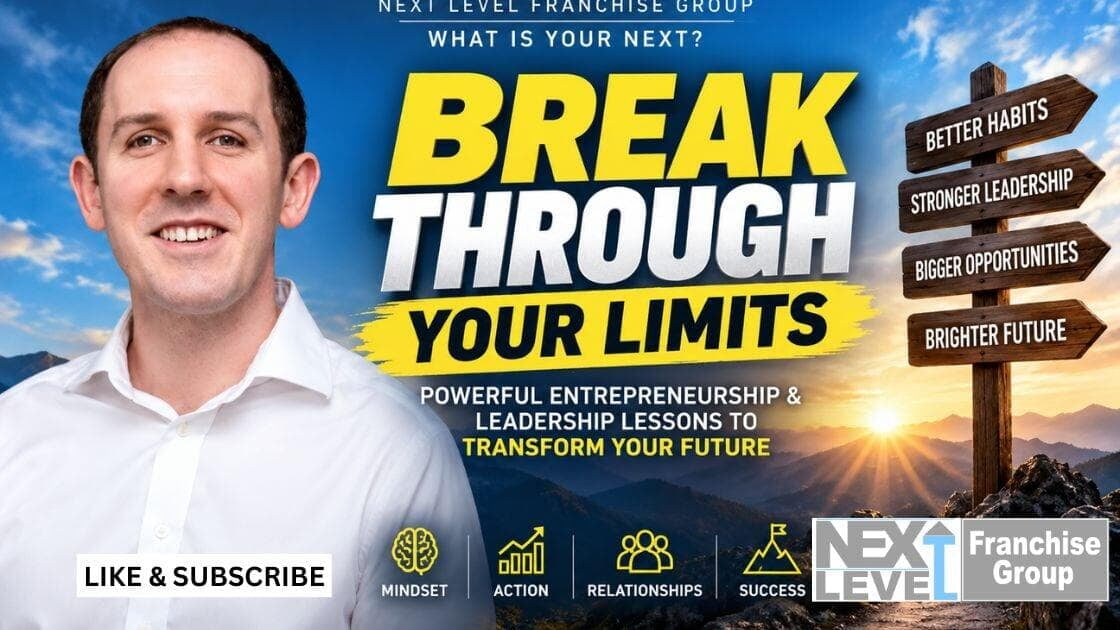
Success is often described in terms of talent, opportunity, or ambition. Yet the conversation between Stacey Riska and Patrick presents a different perspective: meaningful progress often begins with the beliefs we accept, the habits we practice, the relationships we build, and our willingness to take action despite uncertainty.
Patrick, who has been blind since birth, shares lessons drawn from his experiences as an author, sales leader, entrepreneur, coach, and professional speaker. His story isn't simply about overcoming a disability. It provides a broader framework for examining the limitations people accept in their careers and businesses—and how those limitations can sometimes be challenged.
At the heart of the conversation are four powerful themes: entrepreneurship, leadership, personal development, and business success.
🌱 The Power of Expectations
One of Patrick's earliest advantages was the way his parents approached his blindness. They did not pretend it didn't exist. Instead, they recognized that certain tasks might require additional effort while resisting the assumption that blindness automatically determined what he could accomplish.
That distinction matters.
People frequently encounter expectations about what someone with their background, circumstances, experience, or abilities is "supposed" to achieve. When those messages are repeated often enough, they can become internal beliefs.
Patrick experienced this himself, particularly during adolescence and early adulthood. Eventually, he began to reinterpret being different. Rather than viewing difference exclusively as a disadvantage, he started considering ways it could become an asset.
The broader lesson is that circumstances are real, but the conclusions we draw from them deserve examination.
💼 When a Comfortable Job Becomes a Trap
Patrick describes a period around 2010 when he worked in a bank call center earning approximately $10 per hour.
He disliked the job intensely. His anxiety about returning to work on Monday could begin as early as Sunday morning.
Eventually, he calculated his earnings by the minute. Ten dollars an hour worked out to roughly 17 cents per minute.
That calculation changed his perspective.
Instead of asking only, "How much money am I earning?" he began asking what he was receiving in exchange for a minute of his life.
The example illustrates a problem Patrick describes as being comfortably miserable. A situation can be unpleasant without being painful enough to force change. A dependable paycheck, familiar routine, or perceived security may keep someone in circumstances they repeatedly say they want to leave.
This doesn't mean everyone who dislikes a job should immediately resign. It means dissatisfaction is worth examining deliberately rather than automatically accepting it as permanent.
⚖️ Turn Fear Into a Concrete Risk Assessment
Entrepreneurship inevitably involves uncertainty. Patrick suggests dealing with that uncertainty by defining it rather than allowing fear to remain abstract.
Suppose someone wants to leave a job and start a business. They could write down:
What could go right?
What could go wrong?
What is the absolute worst realistic outcome?
If that outcome happened, could I recover?
How likely is it, on a scale from 1 to 10?
The exercise changes the question from "What if everything goes wrong?" to "What exactly could go wrong, how probable is it, and what would I do next?"
Sometimes the feared outcome is serious and deserves preparation. In other situations, a person discovers that failure would be disappointing but survivable. Perhaps the business closes and they return to their former profession.
Risk doesn't disappear simply because it has been analyzed. But defined risk can be easier to evaluate than undefined fear.
For anyone pursuing entrepreneurship, this distinction can be enormously useful. Starting a company does not require pretending that risk doesn't exist. It requires understanding which risks are real, which are manageable, and which may have been exaggerated by fear.
🧠 Stop Living According to Imagined Opinions
Another obstacle is concern about what other people might think.
Family, friends, colleagues, and communities can provide valuable advice. But Patrick distinguishes useful feedback from hypothetical judgment.
A person may think:
"What will everyone say if I try this and fail?"
Yet "everyone" may never have said anything at all.
This creates an unusual situation: an important life decision can be controlled by criticism that exists primarily in someone's imagination.
The alternative isn't to ignore all outside advice. It's to determine whose opinions deserve significant weight and whether the criticism being feared is actually occurring.
This is a central component of personal development: learning to separate constructive outside perspectives from assumptions that unnecessarily restrict your decisions.
🎯 Goals Matter, but Habits Move You
Patrick's discussion of high performers shifts attention from extraordinary ambition toward ordinary behavior.
Goals identify where someone wants to go. Habits influence whether they actually get there.
Someone can have an impressive business plan, ambitious revenue target, or carefully written personal objective. None of those produces results without repeated behavior.
Patrick recommends deliberately practicing a desired behavior for roughly 30 days as a way of establishing consistency.
The important principle is broader than the exact number of days. Sustainable achievement comes from repeatedly performing useful actions, including when motivation is low.
A goal might say:
"I want to grow my business."
A habit translates that aspiration into something actionable:
"Every weekday, I will contact prospective clients."
The second statement creates behavior that can actually be performed and measured.
This is where business success becomes less mysterious. Big outcomes are often built through relatively small actions repeated consistently over long periods.
🤝 Relationships Are Still a Competitive Advantage
Modern businesses have access to automation, artificial intelligence, social platforms, email campaigns, customer-management systems, and countless other technologies.
Patrick nevertheless emphasizes something much older: relationships.
Business ultimately involves people trusting other people.
Relationship building doesn't require an extroverted personality. It can involve small, deliberate behaviors: keeping a promise, following up after a conversation, remembering an important event, checking on someone without trying to sell something, delivering more than expected, or sending a handwritten note.
These actions communicate that another person is valued as more than a transaction.
Over time, such behavior can create trust—and trust can become one of the most durable assets in business.
👥 Leadership Is About Responsibility
Patrick recalls a mentor named Joe whose leadership left a lasting impression.
Joe knew people's names and made individual employees feel recognized. When the organization succeeded, he credited the team. When something went wrong, he accepted responsibility instead of immediately searching for someone else to blame.
That approach offers a simple leadership principle:
Give credit outward. Take responsibility inward.
Leadership also doesn't begin when someone reaches an impressive title or manages hundreds of employees.
An entrepreneur working with one contractor already has an opportunity to practice leadership. So does someone managing a small team, serving clients, mentoring another person, or taking responsibility within a family.
Leadership is therefore better understood as behavior than status.
🚀 Impostor Syndrome Can Accompany Success
One striking theme in the conversation is that self-doubt doesn't necessarily disappear after achievement.
People can accumulate accomplishments and still wonder whether they truly belong at the next level.
This is important for entrepreneurs because waiting to feel completely confident may mean waiting indefinitely.
Confidence can sometimes follow action rather than precede it.
Patrick's own speaking career illustrates this. He initially questioned whether people would care about his story. Audience responses provided evidence that his experiences were valuable to others.
One aspiring entrepreneur told him that hearing what he had accomplished helped her believe she could pursue her own ambitions. That encounter contributed to the idea behind his book, If I Can Do It, You Can Do It.
His uncertainty wasn't resolved entirely through internal reflection. It changed partly because he acted, received feedback, and learned from the result.
🔥 The First Step Creates Momentum
The episode ultimately returns to a straightforward challenge: identify the action you already know you should take.
For one person, that might mean making a phone call.
For another, it might mean contacting a potential client, finding a mentor, registering a business, beginning a sales process, requesting help, or having a difficult conversation.
Large ambitions can become intimidating because we mentally experience the entire journey at once. Action reduces the problem to the next executable step.
That first step doesn't guarantee success.
It does something more immediate: it replaces speculation with information. Once someone acts, there is a result to evaluate, something to learn, and a next decision to make.
✨ What's Your Next Move?
Patrick's story suggests that progress rarely depends on a single breakthrough. It emerges from a collection of choices.
Question assumptions that have been inherited from other people. Define risks instead of merely fearing them. Build habits that support your goals. Invest in relationships without treating every interaction as a transaction. Give others credit and accept responsibility as a leader.
Most importantly, translate intention into behavior.
The distance between a goal and an accomplishment can appear enormous when viewed all at once.
The next action is usually much smaller.
And that is precisely why it can be taken today. 🚀
What's Your Next? - Podcast
 | Author BioI’m Stacey Riska aka “Small Business Stacey”, your franchise placement specialist. I help aspiring business owners find the PERFECT franchise so they can get to the next level in life and business. |