
In an era where 🏗️ entrepreneurship is increasingly accessible yet equally unforgiving, the story of Philip Duong offers a compelling case study in resilience, monetization strategy, and human-centered innovation. In an episode of the podcast What's Your Next, hosted by franchise matchmaker Stacey Riska, Philip recounts his journey through four startups — three of which failed 😅 — and the bold birth of his latest venture, Quartrly. His story is not merely a tale of business success; it is an 📚 education in how failure, monetization thinking, and market observation converge to create meaningful opportunity.
🌱 The Entrepreneurial Mindset Starts Early
Philip's journey reveals that entrepreneurial instinct often emerges long before adulthood. While he never ran a lemonade stand 🍋, he was the child who bought candy and gum in bulk and resold individual pieces from his school locker — purchasing a pack for 25 cents and reselling each piece for the same price. This early arbitrage illustrates a foundational business truth: value is created when you identify something people want and make it conveniently available. 💰 Philip's willingness to act on opportunity, rather than simply observe it, would later define his approaches to technology and entrepreneurship.
🖥️ Startup One: Turning an iPad Into a Time Clock
Philip's first venture emerged when the iPad was first released roughly twelve to thirteen years ago. Having a background in computer tech and networking — but notably not in iOS development — he recognized a need for software that could transform an iPad into a time clock system for attendance tracking ⏰. He hired an overseas developer and completed the entire project exclusively through email 📧 because the developer refused to join phone calls. Despite this unusual constraint, the project was delivered. The lesson here is twofold: first, resourcefulness can compensate for technical gaps; second, projects can succeed even under unconventional or difficult working conditions.
💸 Startup Two: The Critical Lesson of Monetization
Philip's second startup tackled a common modern problem: meeting someone new without exchanging contact information. The software connected two people and allowed them to communicate within the app, preserving each party's privacy until they chose to share details. The venture ultimately failed — but for an instructive reason. Philip had not determined how the software would generate revenue. 😬
This failure crystallized one of the most important lessons for any aspiring software entrepreneur: you must think about monetization from the very beginning. Philip outlines three primary monetization models:
📺 Advertising, where a platform earns revenue by running ads.
🔁 Subscription models, where users pay a recurring monthly fee.
💳 Pay-per-service, where users pay for each individual use of a service.
Quartrly, notably, uses the third model — a decision directly informed by this earlier failure. The insight is simple but profound: if a venture cannot make money, it is a hobby, not a business. 🎯
🎮 Startup Three: The Expensive Reality of Game Development
Inspired by the enormous revenues of games like Clash of Clans and Angry Birds, Philip entered game development. He quickly discovered that the hardest part is not building the game itself, but acquiring users, retaining them, and monetizing them profitably. User acquisition costs are extremely high 📈, and generating sustainable returns often requires "deep pockets." When he realized the returns did not justify the investment, he made the disciplined decision to walk away — a crucial entrepreneurial skill: knowing when to stop. ✋
📅 Quartrly: A Platform for Monetizing Expertise, 15 Minutes at a Time
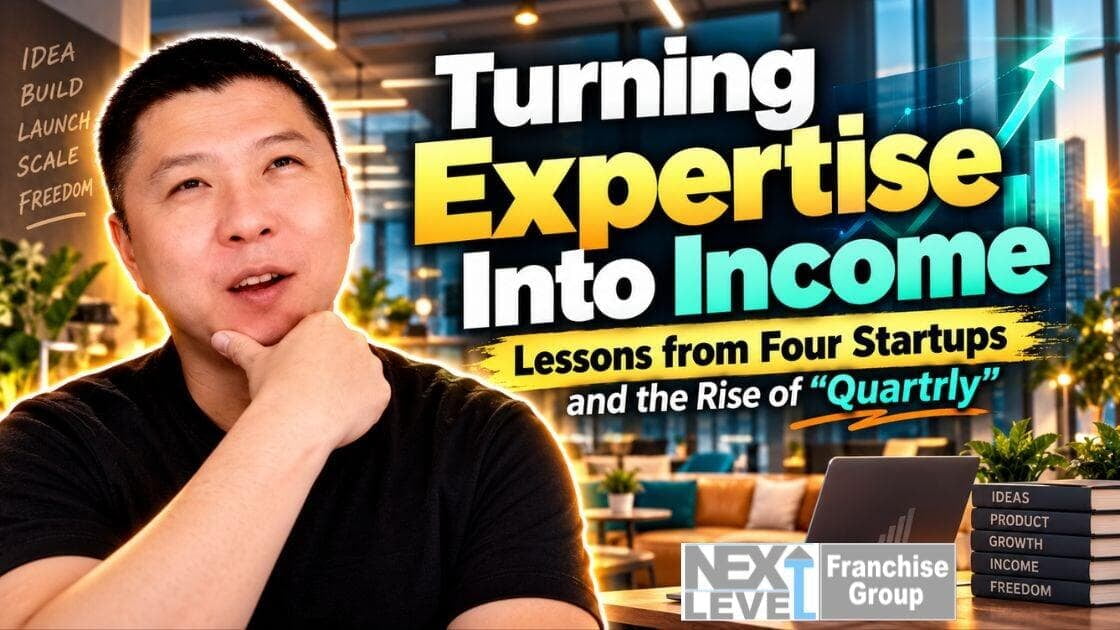
Quartrly is Philip's fourth (or fifth) startup, and it was funded with an audacious decision: he sold his California home 🏠 to finance it. The concept is elegantly simple. As Stacey frames it: "Uber helped people monetize their cars. Airbnb helped people monetize their homes. Philip wants to help people monetize themselves — 15 minutes at a time."
⚙️ How It Works
Quartrly is described as the world's first platform where individuals monetize themselves over a 15-minute video call 📹. Key mechanics include:
💲 User-set rates: Anyone can set their own price — ranging from a low of about $5 to a high of $999 per 15-minute call.
📊 Market-driven pricing: If rates are too low, too many people book; if too high, nobody books. The market determines value.
🔄 Full ecosystem management: Quartrly handles the video call, credit card payment, scheduling, and payouts.
🌐 Cross-platform accessibility: Unlike FaceTime, which requires iPhones on both ends, Quartrly is web-based and works on any browser and any device — laptop, Android, or iPhone.
👥 From Micro-Influencers to Universal Experts
The initial inspiration was to help micro-influencers (those with 10,000–20,000 followers) monetize their audiences through paid 15-minute calls, rather than chasing brand deals that better suit larger influencers. As development progressed, Philip realized the platform applied far more broadly — to topic experts, consultants, and virtually anyone with knowledge worth paying for. 🙌
🔧 A Practical Illustration: The Plumber
Philip offers a vivid use case. A homeowner with a plumbing issue typically faces a $100 on-site visit fee, even when the issue may be simple. With Quartrly, a homeowner could pay a plumber $40 for a 15-minute video call to diagnose the problem. This saves the homeowner money, avoids reliance on "YouTube University" 🎓, reduces the risk of a flooded house 💦, and allows the plumber to be better prepared if a site visit is ultimately required. It is a win-win demonstration of how video calls can substitute for — or enhance — traditional service calls.
🧭 Finding Your Value: Advice for the Uncertain
A key question raised by Stacey concerns professionals with two decades of corporate experience who nonetheless hesitate: "I don't consider myself an expert — how do I know what people will pay for?" Philip's answer is empowering:
🤝 Leverage your own network — for example, share on LinkedIn how many years of experience you have and offer a booking link.
📉 Let the market reveal your value — pricing will self-adjust based on demand.
💎 Recognize that everyone has expertise — someone is always asking you for guidance, and that demand signals value.
Currently, users must market themselves to their own networks. However, as Quartrly grows, a network effect is expected: users will search for expertise (e.g., "I need a business consultant for 15 minutes") and book providers organically. 🔍
🤖 Quartrly and AI: Complementary, Not Competitive
A natural objection is: "Why not just use ChatGPT?" Philip's response is nuanced. He positions AI and Quartrly in different verticals:
🧠 AI excels at returning text-based information quickly.
🗣️ Quartrly provides a live conversation with an experienced human, offering shared stories, back-and-forth dialogue, and relationship-building that AI cannot replicate.
AI will not replace a custom video conversation with a seasoned expert, and Quartrly will not replace AI. The lesson: choose the right tool for the right problem. Stacey adds a memorable philosophy — all business is H to H (human to human) ❤️ — and human interaction carries a value that no algorithm can fully substitute.
🏆 The Overarching Lesson: Redefining Failure
Perhaps the most powerful takeaway of Philip's journey is his perspective on failure. In school, an "F" signals failure and is treated as inherently bad. In business, however, failure is an unavoidable part of the process. There is no building a business without it.
Philip's framework:
✅ Accept failure as a normal component of entrepreneurship.
📝 Extract lessons from each failed venture and apply them moving forward.
📈 Recognize compounding progress — after three failed startups, Quartrly is, in his view, more valuable than all three combined.
We try to reframe failure as "lessons learned," emphasizing that the most successful people are often those with the most war stories — and the resilience to get back up and try again. 💪
🚪 Getting Started with Quartrly
For those inspired to act, Philip provides clear pathways:
🔗 Visit Quartrly.com to register (the easiest method is Google sign-in).
🎁 Use your six-character invite code when referring others — you earn 1% of the revenue the people you invite generate on the platform.
✉️ Contact Philip directly at CEO@Quartrly.com for business and partnership inquiries.
Philip Duong's story is a masterclass in several timeless principles: monetization must be intentional, failure is data, not defeat, marketplaces thrive when they help people earn, and human connection retains irreplaceable value in an increasingly automated world. Quartrly is not just a software product — it is a philosophy that each person's time and expertise have worth, and that worth can be unlocked, fifteen minutes at a time. ⏳✨
What's Your Next? - Podcast
 | Author BioI’m Stacey Riska aka “Small Business Stacey”, your franchise placement specialist. I help aspiring business owners find the PERFECT franchise so they can get to the next level in life and business. |