
In business, we are taught to measure progress through revenue, growth, titles, and recognition. But beneath those external milestones lies a deeper and more enduring question:
What are you leaving behind for the people you love? ❤️
This question shifts the conversation from achievement to legacy, from accumulation to clarity. And for many families, it is a conversation that is long overdue.
The Hidden Gap: Why 70% of Americans Avoid Estate Planning 📊
One of the most striking realities discussed in the conversation is that 70% of Americans do not have an estate plan.
This includes not only middle-income families, but also high-earning professionals—doctors, business owners, and even celebrities. The issue is rarely a lack of resources. Instead, it is often:
Procrastination
Discomfort with discussing death
Ego and fear of judgment
Emotional avoidance
Confusion about where to start
Estate Planning feels non-urgent—until it becomes urgent. And when crisis strikes, families are left navigating grief alongside legal complexity.
💡 Clarity Is Love in Practical Form
At the heart of the discussion is a powerful idea:
Clarity is love in practical form.
If you truly love someone, one of the most practical gifts you can give them is clarity.
Clarity about:
Your wishes
Your assets
Your healthcare preferences
Your values
Your memories and meaningful possessions
Much like journaling reduces anxiety by organizing scattered thoughts, estate planning organizes the logistical and emotional dimensions of your life. It reduces uncertainty for those who will one day have to carry your responsibilities forward.
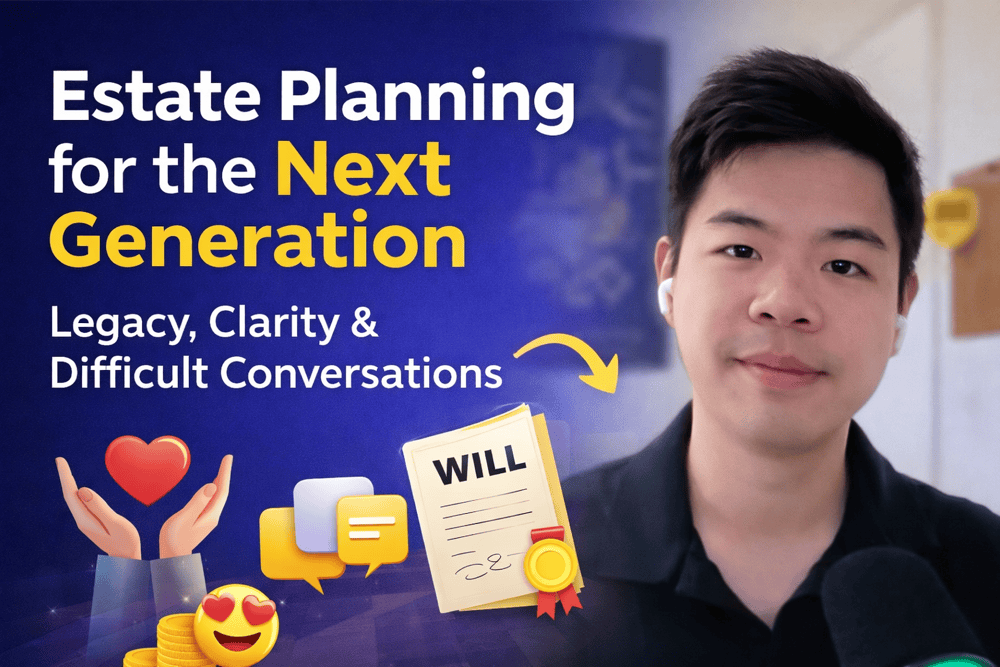
🗣️ The Real Barrier: Difficult Conversations
Interestingly, the biggest obstacle is not legal documentation—it is conversation.
In many families, talking about death feels taboo. In others, discussing money feels intrusive. Cultural norms, generational differences, and language barriers add complexity.
But difficult conversations do not need to start with paperwork.
They can begin with simple, human questions:
“What was your favorite movie growing up?”
“Tell me the story behind that watch you always wear.”
“Is there somewhere in the world you’ve always wanted to visit?”
These small openings build comfort and trust. Over time, they create space to ask deeper questions about wishes, values, and long-term plans.
🚀 From Achievement to Meaning
Many ambitious individuals spend their early years chasing recognition, visibility, and financial success. But perspective changes over time.
A reflective exercise mentioned in the conversation is writing your own eulogy. While it may sound uncomfortable, it forces you to answer:
How do I want to be remembered?
Who matters most to me?
What impact truly counts?
For some, early aspirations revolve around public recognition. Later in life, priorities often shift toward presence, relationships, and showing up consistently for loved ones.
Estate planning becomes less about distributing assets and more about aligning your life with what genuinely matters.
How do I want to be remembered?
Who matters most to me?
What impact truly counts?
⏳ The Cost of Waiting
A powerful example shared in the discussion underscores the unpredictability of life. After meaningful conversations revealed a lifelong dream, a family fulfilled a mother’s wish to visit Salzburg, Austria—just days before her sudden hospitalization and passing.
Because conversations had already happened:
Legal documents were in place.
Wishes were understood.
A major dream had been fulfilled.
Even with preparation, loss is overwhelming. But clarity softens chaos. It transforms regret into gratitude.
The four words many people never want to say are: “I wish I had.”
🌍 Tools, Options, and Responsibility
Today, families have more options than ever:
Online legal services
AI-assisted platforms
Traditional attorneys
Hybrid technology-guided processes
Each comes with trade-offs in cost, complexity, and personalization. However, no tool can replace communication.
Technology can organize thoughts. Attorneys can draft documents. But only families can have honest conversations.
🤝 Expanding Access and Financial Legacy
Many immigrant families or non-English-speaking households lack access to affordable estate planning resources.
Building multilingual and low-cost solutions helps:
Reduce generational wealth loss
Prevent family conflict
Empower underserved communities
Normalize proactive planning
When estate planning becomes accessible and culturally adaptable, it strengthens families at every income level and protects Financial Legacy across generations.
🌟 Living Fully While Planning Wisely
Estate planning is not about preparing to die. It is about choosing how to live.
When you clarify what matters—relationships, experiences, values—you begin to prioritize them today.
Legacy is not only what you leave behind. It is what you choose to build, experience, and communicate while you are still here.
This is the true power of Legacy Planning and meaningful Difficult Conversations.
What's Your Next? - Podcast
 | Author BioI’m Stacey Riska aka “Small Business Stacey”, your franchise placement specialist. I help aspiring business owners find the PERFECT franchise so they can get to the next level in life and business. |